Most public affairs professionals have a website horror story – over budget, delayed timelines, functionally broken.
Starting with a phone call, an idea for an issue campaign launching could take hours to come to creation. Hiring a designer for the logo, writing talkers, and securing social channels would take another few days. But then you would hit the dreaded website.
In my former life as head of a team of developers at a breakneck digital agency, we tried to churn our websites in two weeks. Those websites would be single-page, feature-dry placeholders for a bigger more robust hub of information for our campaign. I think the fastest I went from idea to live on a domain was still capped at a week.
The first torndown wall of the AI revolution is looking to be web development.
Shifting campaign dynamics, the website is quickly becoming one of the quickest tasks before launch. You can build a simple website in hours, a feature rich one in days. It’s eliminating the intermediary web developer and making the AI skillset highly sought after.
Furthermore, it’s not just faster – it’s more capable. Integrating an advocacy component, a one-sentence prompt. Visualizing rich data in easily consumable ways, upload the CSV. Adding a badass transition between pages, your imagination is the limit.
I know this firsthand because I’ve sent these prompts and built websites for my clients.
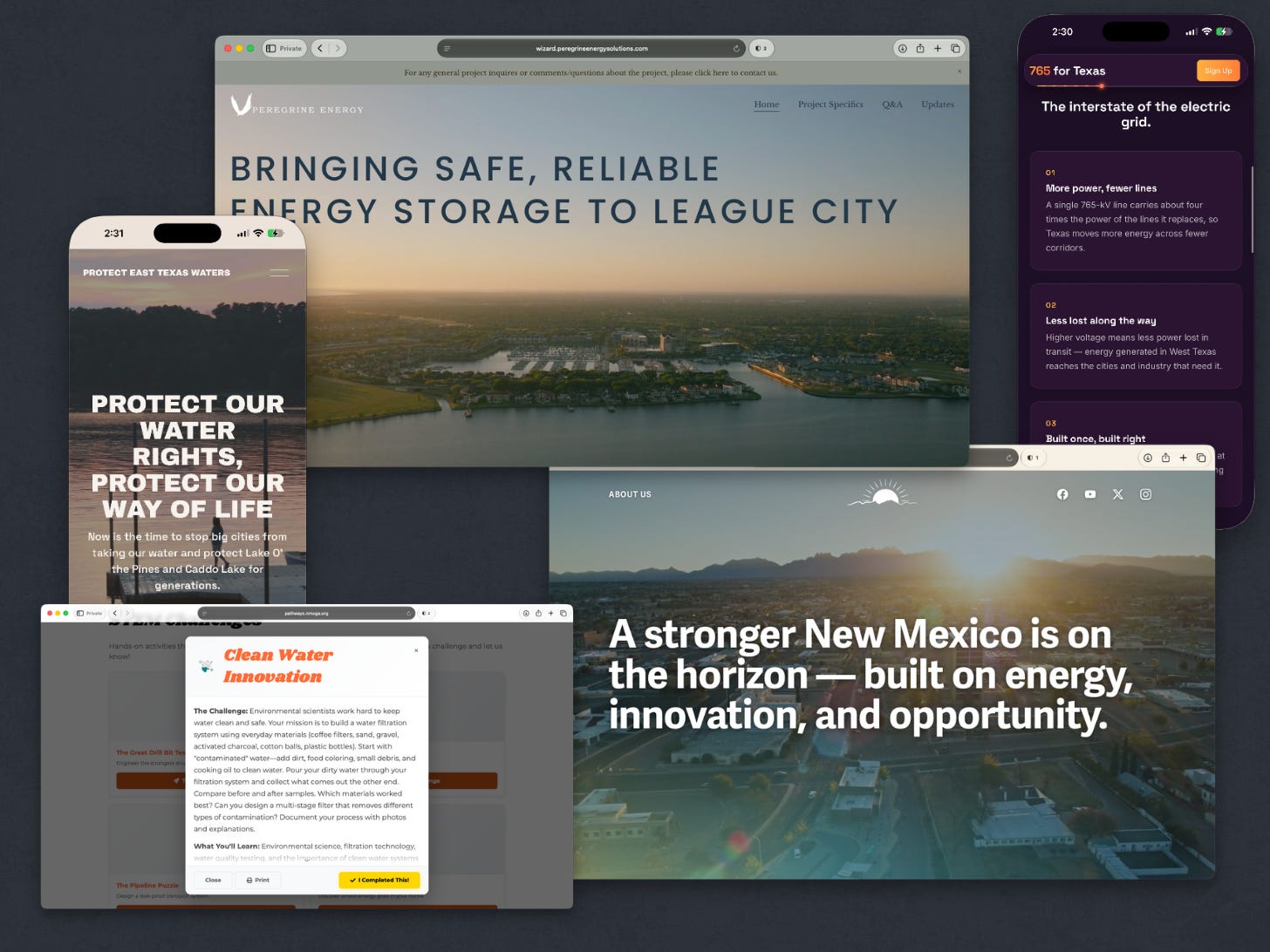
What once was my team of developers is now an army of agents (Claude sessions for the uninitiated) that take my high-flying, wacky ideas and translate them into HTML, CSS, and other coding languages I don’t even know.
But the democratization of web development means more of the same.
I present to you the 2025 Merriam-Webster Word of the Year:
slop noun
digital content of low quality that is produced usually in quantity by means of artificial intelligence
There is no shortage of discourse around AI slop taking over the internet. And some of us can see the tells: same templated layouts, blue-to-purple gradients, “eyebrow” labels, colored left border stripe – the em-dash!
And with the commoditization of AI-assisted website building the market is starting to lose the ability to tell quality apart. Competition is collapsing entirely onto speed and pricing – two things upended by AI at an exponentially growing scale.
But on the other side of the coin, strapped campaigns, leaner non-profits, and the average citizen have been given access to immensely powerful tools to attempt to bend the will of the bureaucratic state into their corner. The fourth branch – lobbying and public affairs – has been ever expanding since the dawn of the 21st Century and with this turn it brings in those that could not compete just a few years ago.
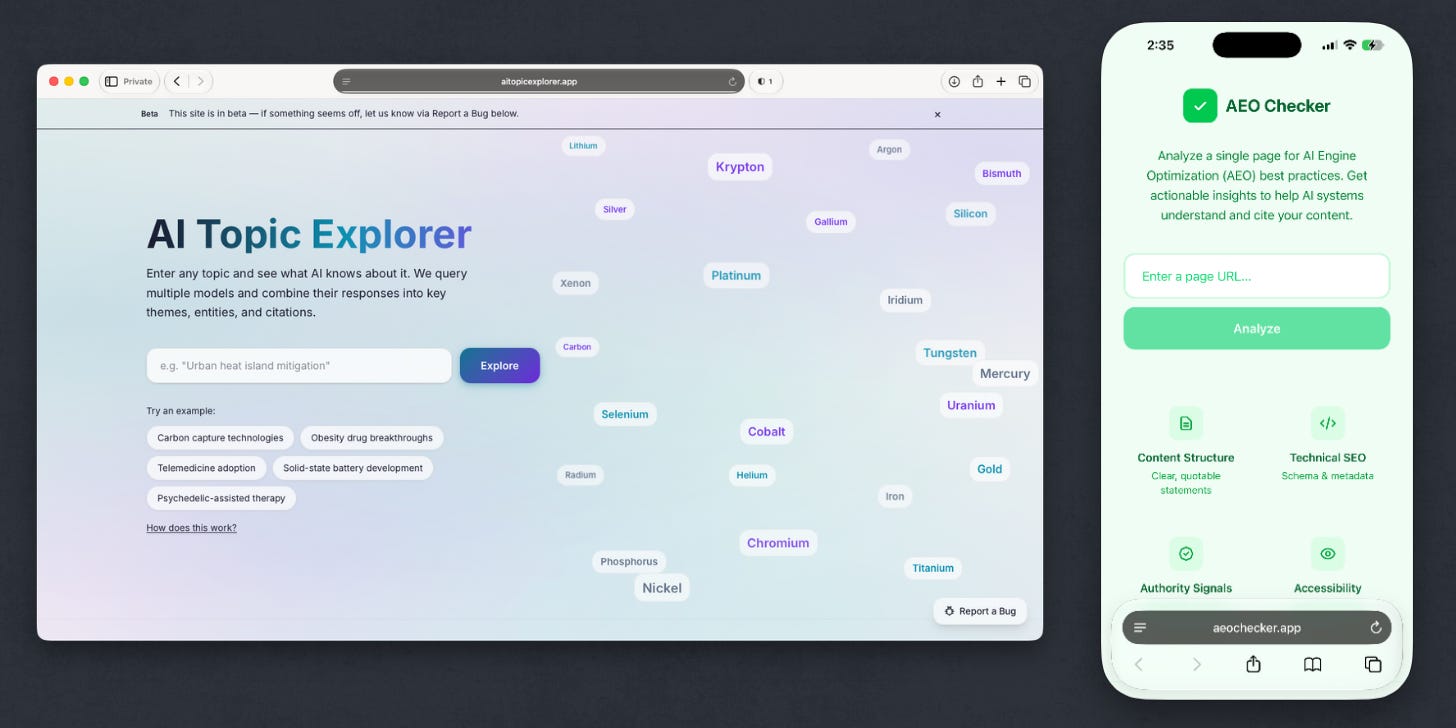
If you can’t beat them, lead them. And we are.
I often tell about how a few years ago I would come into work energized to build a great idea I had the night before. I’d seek out the freshly caffeinated web developer who would tell me that he would have to do research on how to accomplish that and it’d take three weeks before launch.
Now I type that into a chatbox and Claude is finished in about thirty minutes.
The difference is drastic, but new rules of engagement have emerged. We work hard, through built-in safeguards and education, to prevent AI slop in our finished work product. Notwithstanding the final human eye before launching any website.
It starts with transcribing brand guidelines into a thorough and defined design-language.md that roots all of our work going forward. Our team works on a shared Claude plan with a single source of truth for building called our Development Guidelines. While this includes bumpers for collaboration across team members, it also houses design skills that intentionally stomp out AI slop. Integrating these into our workflow allows us to build for high-end instead of generic.
We also leave room for human injection. Oftentimes I find different libraries on X (like this, this, and this) that allow me to implement transitions, elements, or ideas that will elevate a development.
Guidelines cannot replace real human knowledge.
What clients pay for
With this shift, resources are allocated differently now.
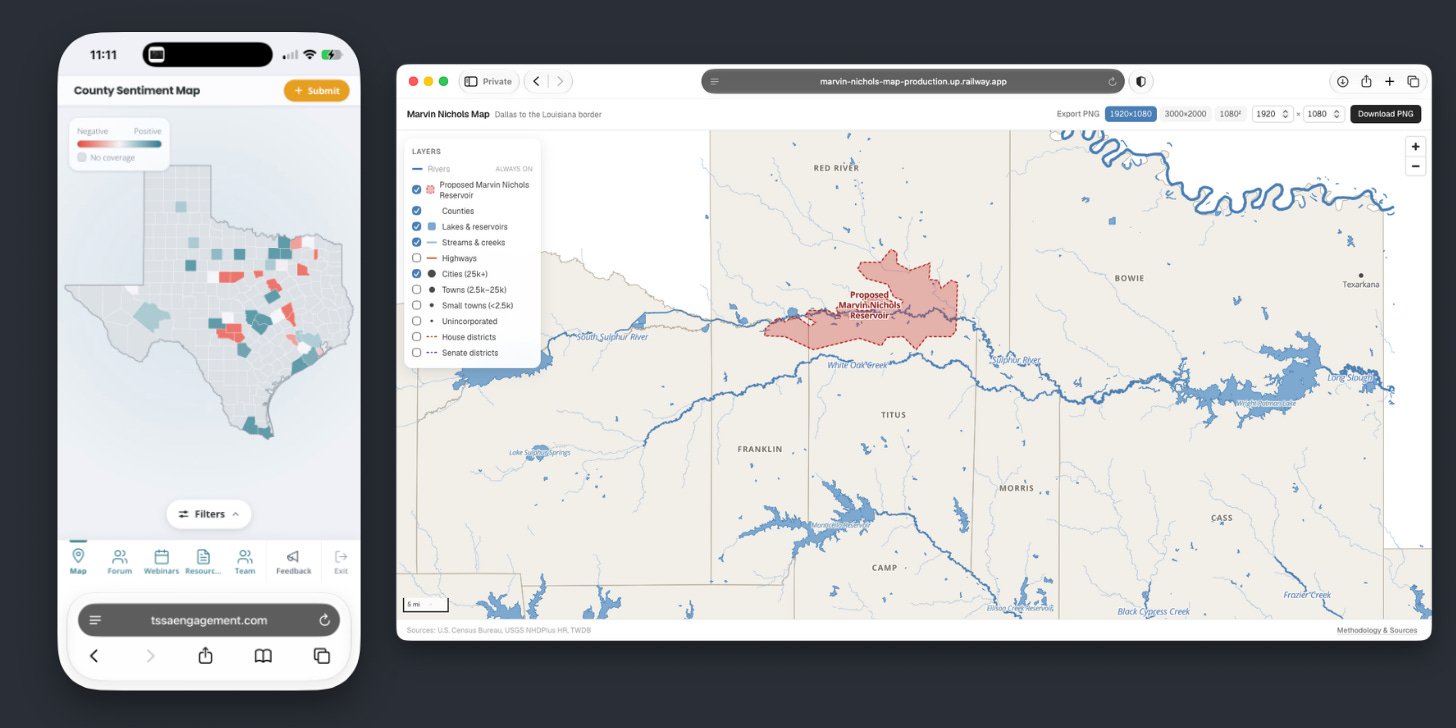
Web developers still have a place in longstanding projects with major features. But for websites and other campaign assets, my clients are now paying for my strategy and creativity. The ceiling has risen with the “every day” website being able to carry more visualization, more features, and more information to educate the public and legislators.
This has always been core to our profession: taking a complex issue and distilling it down to something understandable and actionable. AI doesn’t do this. But it does enable us to expand the way we do. My ideas are now not limited by implementation constraints, like time, money, or individual human knowledge.