I started my career working for politicians, where your job literally depends on the outcome of an election. Win, and the work continues. Lose, and it doesn’t. I’ve since moved on from candidate work into public affairs and the weight of election night hasn’t changed.

Ask most people why a public affairs firm spends so much time on elections and they assume it’s about donations, endorsements, or who wins the headline race. That’s not it. A client’s transmission line, workforce, or messaging campaign can hinge on how engaged a community is in civic life, including voting. And a county commissioner race that most people have never heard of can have the biggest impact on a project.
Energy land use developments now live or die in elections nobody outside the district is watching
This August, Texas lawmakers sat through a nine-hour hearing. Residents in yellow bandanas explained why they didn’t want a 765 kV transmission line routed through their county. The pressure had already reached the top. In July, Lt. Gov. Dan Patrick and a state senate committee chair called for scrapping the project. Days later, Gov. Abbott paused new data center grid connections until ERCOT finishes an audit (Texas Tribune).
Texas isn’t unusual. The same thing is happening across the country. Utah’s state senate president, a legislator for more than two decades, lost reelection by more than 8 points after backing a major data center project. In South Carolina, both Republican incumbents on the Spartanburg County Council who faced primary challengers lost after the council approved tax breaks for a data center. In Maryland, all three incumbent Calvert County commissioners lost to challengers. Monterey Park, California, voted to permanently ban data centers (Christian Science Monitor).
This isn’t a partisan issue. Seven in ten Americans oppose data center construction in their own area, including 63% of Republicans and 75% of Democrats. For clients developing generation, transmission, or large energy-intensive projects, a county commission or county council primary can matter as much to the timeline as the interconnection queue or the permit docket. Tracking which local races have turned into referendums on a client’s project is basic due diligence. It belongs on the checklist next to a title search or an environmental review.
When the story turns into a crisis, it’s already an election story
The tech industry’s response to the data center backlash split into two camps this year. One camp says you can’t message your way out of it. Microsoft’s communications chief put it this way: “you get better communications outcomes when you develop specific programs that address the issue, not when you modify messaging.” Microsoft’s own answer has been to cover the electricity costs its data centers create, reduce and replenish its water use, and invest locally. The second camp wants to go on offense. The Bitcoin Policy Institute, for one, has floated a “data center dividend” modeled on Alaska’s oil fund. This camp also pushes back harder on what it sees as misinformation (Axios).
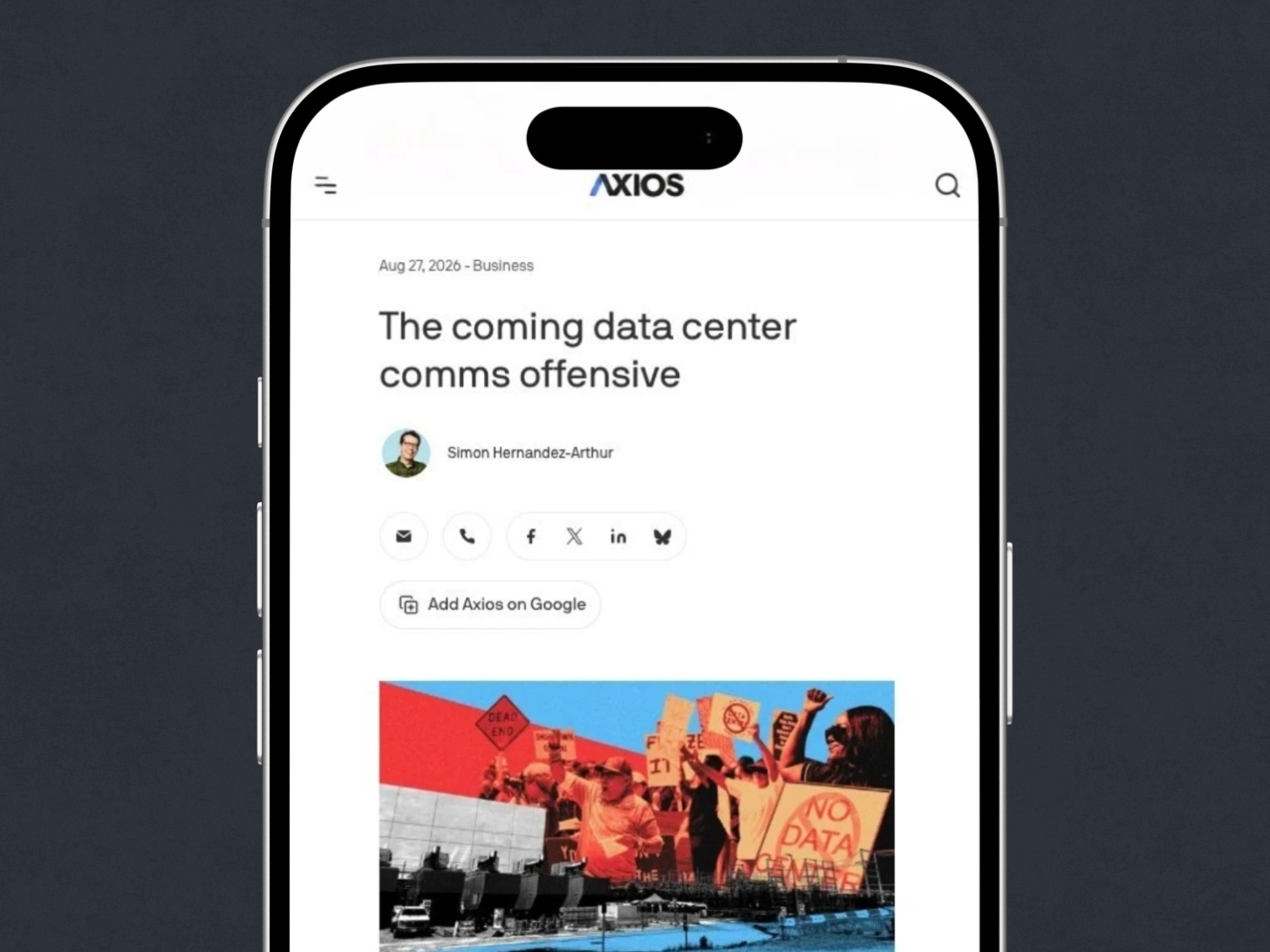
Whichever camp you land in, the old playbook no longer works. Holding a statement in reserve for the next bad headline doesn’t help when the opposition is headed to the ballot box instead of the comment section. A crisis plan built around the news cycle is the wrong plan when the real deadline is the next election.
That’s the shift in how I build crisis plans now. I don’t start with “what do we say if this leaks?” I start with “what does this look like on a mailer next spring, and who is running against the person who approved it?”
Media pitching: getting there before the ballot does it for you
Reporters covering a siting fight or a corporate crisis right now are often covering an election too, whether the story says so or not. The Texas Tribune’s coverage of that nine-hour hearing was as much about elected officials responding to angry constituents as it was about routing engineering. The data center backlash is also increasingly framed through the midterms. Fortune’s August headline said it plainly: the backlash “has broken into the midterms” (Fortune).
That changes what a good pitch looks like. A press release about jobs created can’t compete with a story about a sitting commissioner losing a primary over the same project. What does compete is local voices and real numbers on tax and rate impact. It also helps to start building the narrative months before a filing deadline, not after an opposition campaign has found its candidate.
This part of the job looks like ordinary media relations. It’s really campaign timing. You need to know the legislative calendar and the filing deadlines. Then you get a client’s story in front of the reporters, and the candidates, who will shape it, before someone else writes it for them.
What we tell clients to do: monitor early, engage broadly, stay nonpartisan
Two recommendations show up in nearly every plan we build.
The first is election monitoring, and it needs to start earlier than most companies expect. The Utah, South Carolina, and Maryland losses above didn’t happen in a general election. They happened in primaries for county councils, county commissions, and a state senate seat. Those bodies shape permitting, land use, and tax incentives. For every client with a project on the ground, we build a watch list of those races months before the filing deadline, not the week before the vote.
The second is helping clients decide how to engage in the elections. Almost always, that means nonpartisan voter turnout, not endorsements. The evidence is consistent. Companies can offer paid time off to vote, registration help for employees and subcontractors through nonpartisan services, and neutral information on polling locations and ID requirements from trusted nonprofits. Programs like these work. A Harvard Kennedy School study found that working at a company with a voting program raises an employee’s odds of voting by 2.1 percentage points. That habit tends to outlast the job. It’s also popular: 82% of adults think companies should give workers time off to vote.
“Get out the vote” for our clients means turnout. It doesn’t mean steering anyone toward a candidate. Picture a construction crew that votes in the county commission race that decides their project’s permit, or the race that picks who regulates their industry. That does more for the project than a mailer ever could. And unlike a partisan push, it holds up to scrutiny.
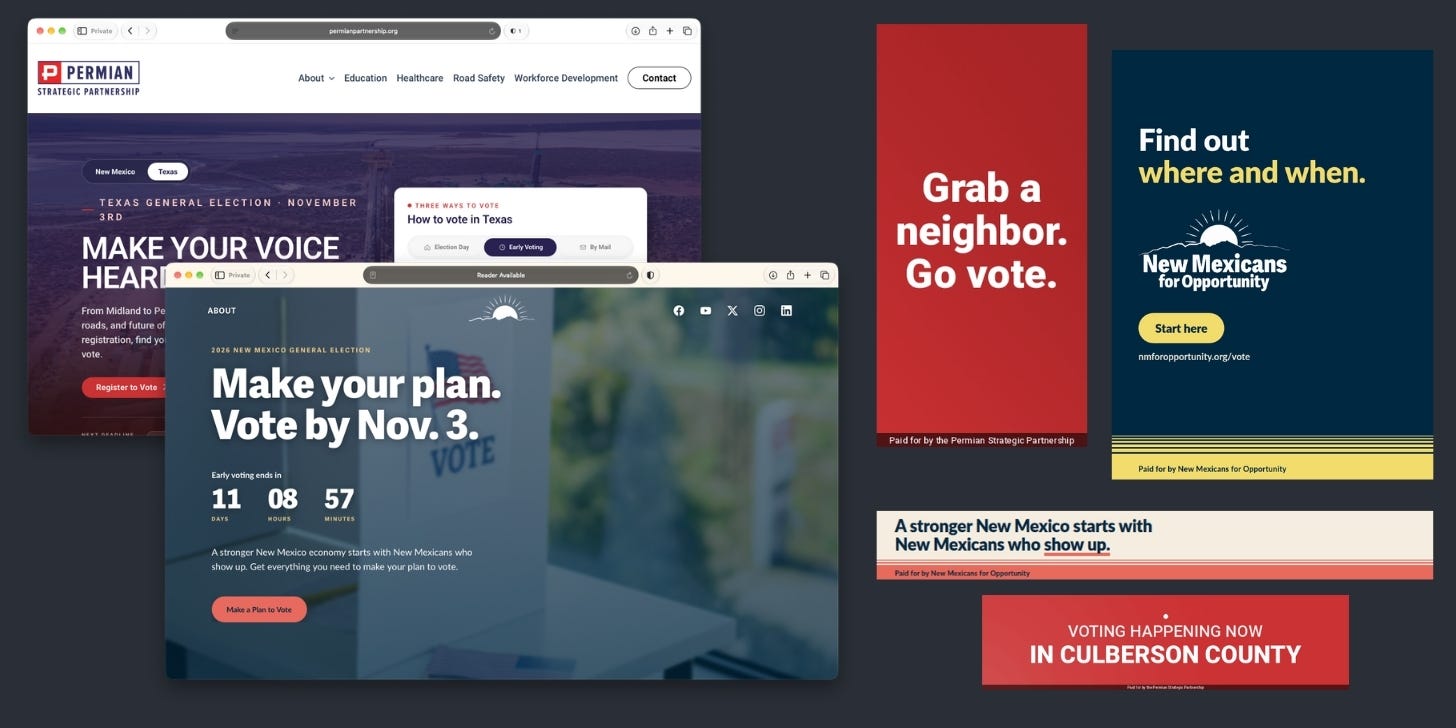
What clients pay Above for
None of this is really about elections. A project’s timeline, an industry’s stability, and a company’s reputation are now decided in places most executives never think to watch, like a county commissioner primary, a hearing room in Austin, or a registration table outside a jobsite trailer. Our job is to see those places before they become the story.
The fight over a project or industry almost never starts with the project. It starts with the election of the decision maker. That’s why we talk about elections, plan advertising and media around them, and build civic engagement into a client’s strategy on the same calendar. By the time a project shows up on a permit docket or a ballot, the outcome is usually pretty hard to change.